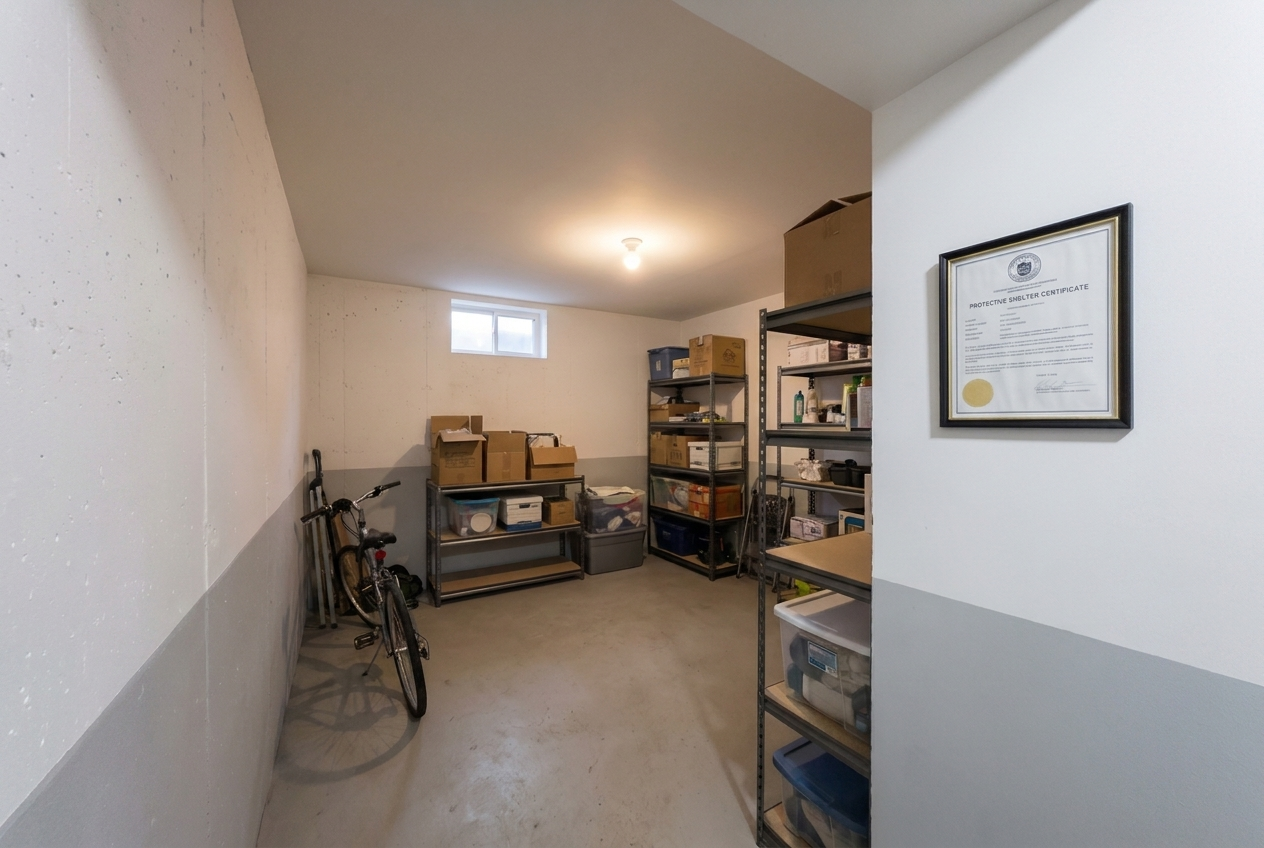
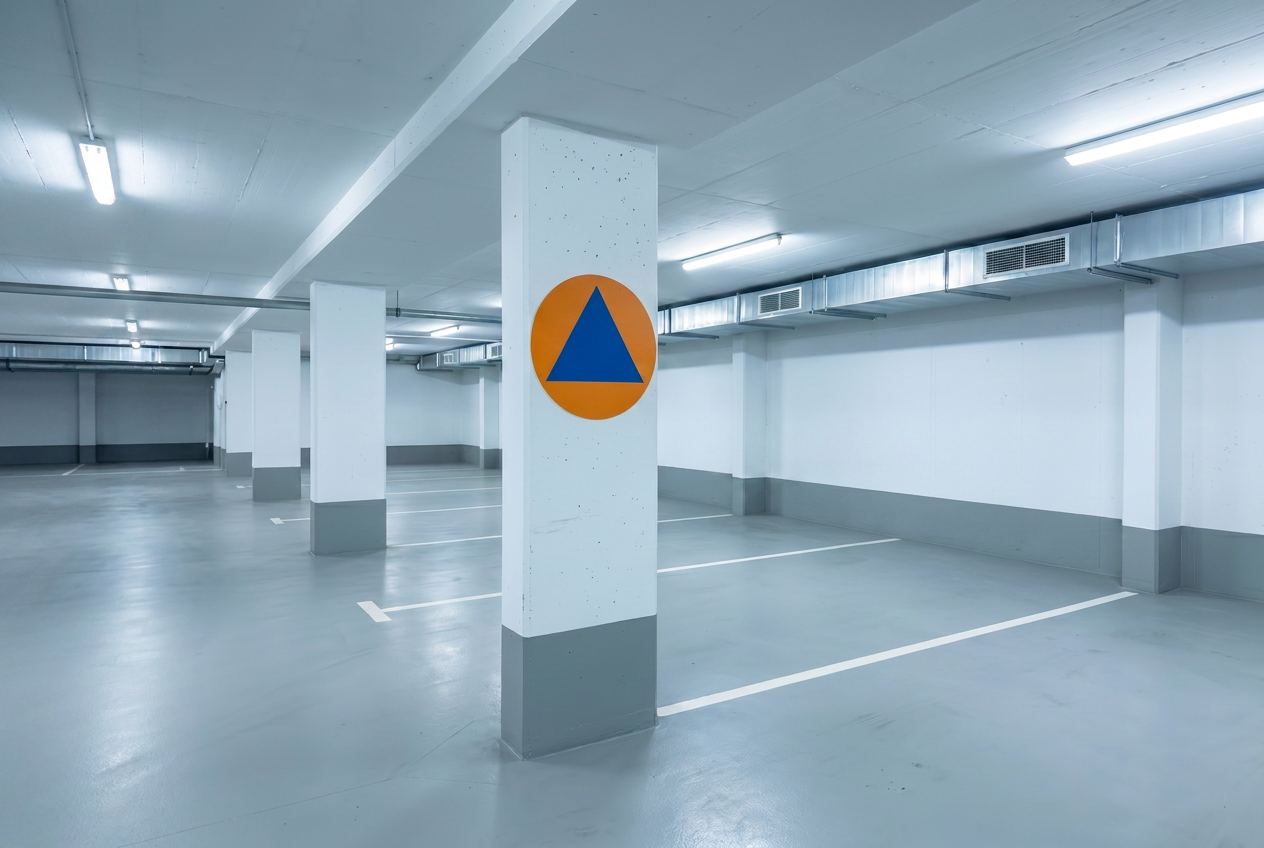
When the line "temporary shelter places" appears in a municipal civil protection plan, it's easy to read it as a closed matter. Object identified, marked, entered into the register, obligation ticked off. The problem is that a temporary shelter place isn't a protective structure the way a shelter or a concealment structure is. It's closer to a promise that some existing room can, if the need arises, be adapted into something.
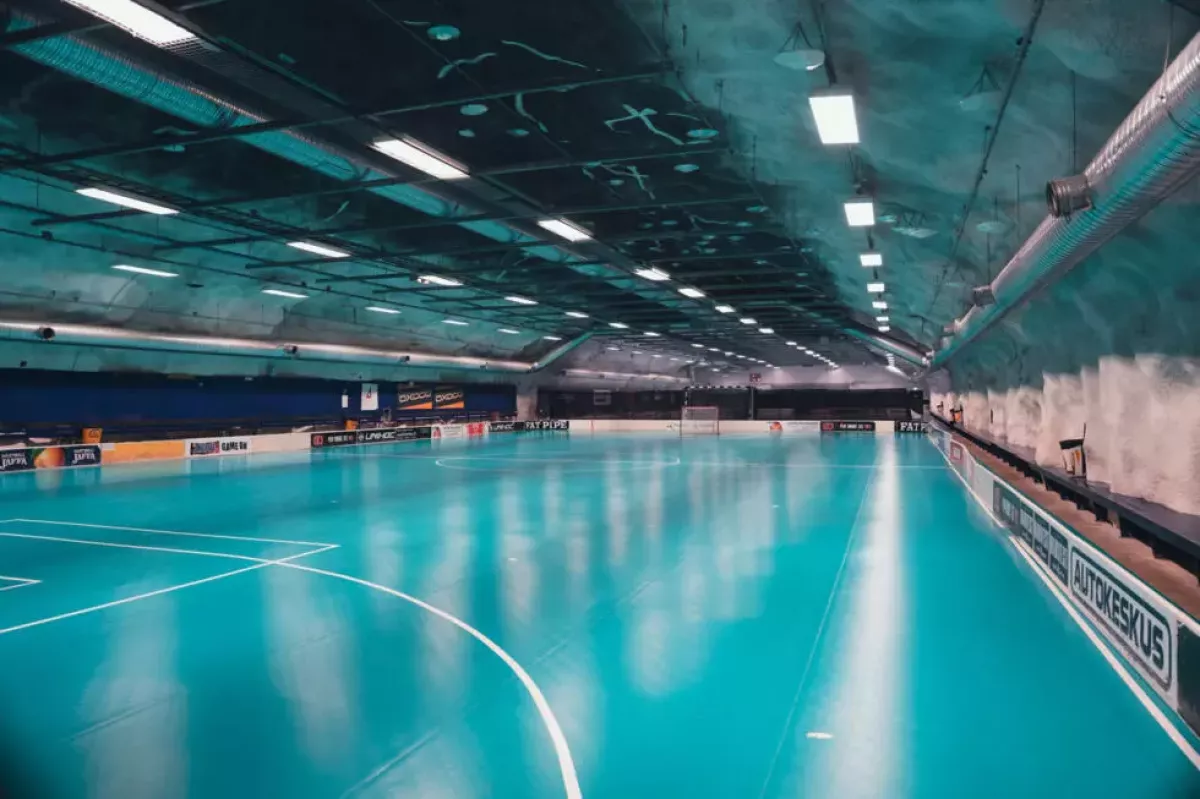
The legal basis is Article 102 of the Act of 5 December 2024 on Civil Protection and Civil Defence (Journal of Laws 2024, item 1907). It says that the competent authority, meaning the head of a rural municipality, a town mayor, a city president, a district head or a provincial governor, organises temporary shelter places by ordering the adaptation of rooms in buildings, underground garages, tunnels, earthworks and excavations for the temporary sheltering of people. The word "temporary" matters here. The legislator doesn't pretend to be building a fortress. It describes a stopgap and names it as such.
The specifics arrived only with the regulation of the Minister of the Interior and Administration of 9 July 2025 (Journal of Laws 2025, item 932), which came into force on 29 July. Only there does it say what a temporary shelter place should look like: 1.5 m² of floor area per person, 2 m² for a wheelchair user, a room height of at least 2 metres, ventilation able to keep oxygen at a minimum of 18 percent and carbon dioxide below 2 percent for 48 hours, lighting of no less than 50 lux, and marking with the international civil defence sign and the words "TEMPORARY SHELTER PLACE". From 1 January 2026 this standard has to be designed into new multi-family residential and public-use buildings for which a building permit application was filed after 31 December 2025.
What the list leaves out
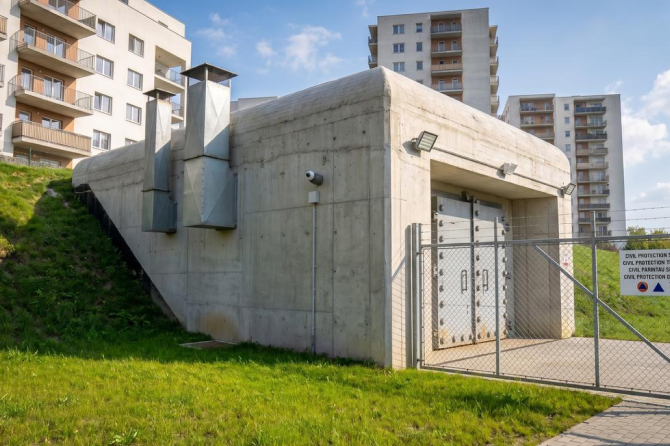
This list looks solid until you set it against what isn't on it. There's no hermetic seal. There's no filter-ventilation, the system that draws air from outside through filters and holds overpressure inside. There's no structural threshold for blast resistance, the kind defined by the resistance categories S-0 through S-3 for shelters and U-1 through U-3 for concealment structures. A temporary shelter place is meant to screen people from shrapnel, rubble and the weather for a time measured in hours. Against chemical contamination, radioactive fallout or a direct hit it is helpless, because it was never meant to be the answer to those. It is the floor of the system, not its ceiling.
The cheapest line, the hidden bill
And here comes the question that looks best of all in a municipal spreadsheet: what does it cost. At first glance, very little. The marking, the register entry, pointing to a room that's standing there anyway. Next to building a concealment structure or a shelter, a temporary shelter place is cheap. Except that marking an object isn't the same as keeping it ready. The slab of an underground car park was calculated for the weight of cars, not for a dense crowd and not for a load coming from above. For that slab to actually give shelter, someone has to check its load capacity, often reinforce it, keep props on hand, and have people who will set those props correctly at the critical moment. That cost doesn't show up in the table. It shows up only when it has to be paid.
The biggest cost, though, is invisible, because it's the cost of an assumption. The Act says more here than it first appears. Article 90 requires a municipality to plan places in collective protection facilities for at least 50 percent of the expected population in a town and at least 25 percent outside a town. In protective structures themselves, meaning shelters and concealment structures, only part of that number has to fit: 25 percent in a town and 15 percent outside it. The rest may be covered by temporary shelter places. So the law allows in advance for a sizeable group of people to be assigned to the weakest rung, with the table still adding up.
A municipality that fills that table to the end has coverage on paper: residents assigned to objects, places counted, the report looking fine. That sense of coverage is comfortable, and that is exactly why it can be dangerous, because it defers the conversation about what a temporary shelter place won't provide. A temporary shelter place isn't civil protection. It's a deferral of the decision about civil protection, recorded in the very spot meant to stand in for that decision.
What to do about it
What follows for someone drawing up a municipal plan who doesn't want it to be a plan on paper. First, separating two things the Act deliberately keeps apart: the minimum that has to be provided, and the level that actually protects. A temporary shelter place is the minimum, and as a minimum it's fine, as long as nobody mistakes it for the ceiling. The next step is taking stock of existing objects to see which of them could realistically be raised to the concealment-structure category, rather than merely marked as temporary. The third is treating seriously the arrangements in which an object used in peacetime, a car park, a warehouse, a retail floor, is designed from the start so that it can become more than a room with a sign. That costs at the outset and saves precisely when only one thing counts: whether the installation switches on.
So the question worth asking over a municipal table isn't whether we have temporary shelter places. It's this: what will happen in each of these objects in the hour they are genuinely needed, and who checked. If the answer ends at a sign on the wall, the sign is all the municipality really bought.
---
At Eltel, we work on the layer that decides whether a protective structure will function at the moment of truth: control, parameter monitoring, and the integration of filter-ventilation. If a municipality or an investor is wondering which existing objects could be raised higher than the temporary level, an audit of that layer is a sound first step.
---
Sources:
- Act of 5 December 2024 on Civil Protection and Civil Defence, Journal of Laws 2024, item 1907, Articles 84, 90 and 102
- Regulation of the Minister of the Interior and Administration of 9 July 2025 on the conditions for organising and the requirements for temporary shelter places, Journal of Laws 2025, item 932
- Regulation of the Minister of the Interior and Administration of 21 February 2025 on the criteria for recognising built objects or their parts as protective structures, Journal of Laws 2025, item 235