
After more than three decades operating under outdated rules from the 1970s, Poland has finally gained a modern legal framework for civil protection. The Act of 5 December 2024 on Civil Protection and Civil Defence (Journal of Laws 2024, item 1907), which entered into force on 1 January 2025, is not a cosmetic tweak — it is a thorough overhaul of a system that for years was stuck in an institutional vacuum. What exactly is changing, and who is most affected by these changes?
Why did the old system stop working?
For years, Polish civil defence operated under rules enacted in a completely different geopolitical reality. There were no clear lines of responsibility, no funding and — most painfully — no physical shelter infrastructure. Russia's invasion of Ukraine in 2022 gave the legislative work an entirely new momentum. The new act is a response to that specific threat, although its scope covers far more than military scenarios alone.
Three pillars of the new system
1. A new management architecture
The act creates a coherent hierarchy of civil-protection bodies: from the municipal (gmina) level, through the county (powiat) and province (województwo), up to the central level. At the head of the system is the minister responsible for internal affairs — a fundamental change, because until now coordinating civil protection rested with the Chief Commandant of the State Fire Service (PSP).
If a state of war is declared, it is the Minister of the Interior who assumes the role of head of civil defence. A new body has also been established: the Government Civil Protection Team, intended to play an advisory and consultative role. The act defines as many as 39 categories of civil-protection entities, from the fire service, through non-governmental organisations, to citizens themselves.
2. Shelter infrastructure and concealment spaces
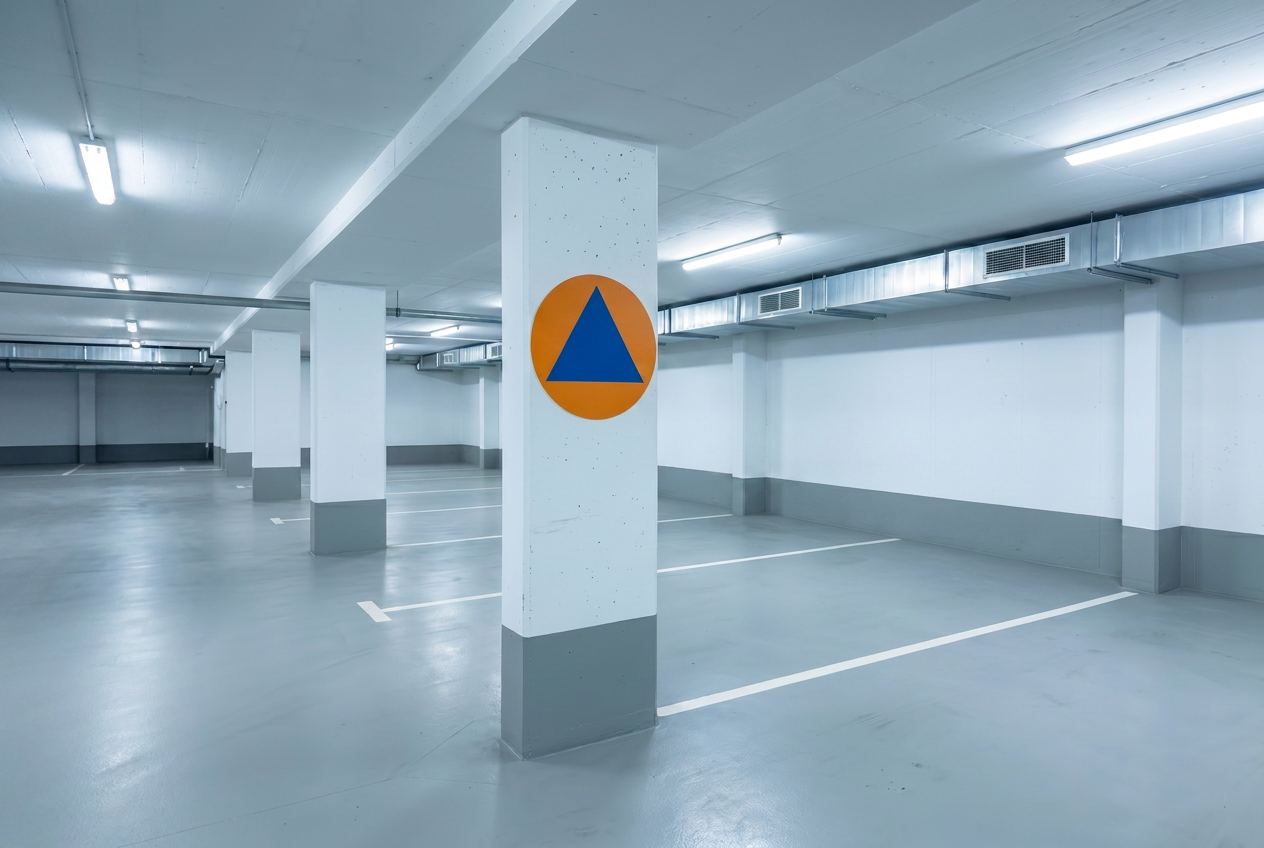
This is arguably the most tangible change for construction investors and developers. From 1 January 2026, new multi-family buildings and public-use facilities will have to meet requirements for temporary shelter spaces or protective concealment spaces.
The capacity of shelter spaces in multi-family residential buildings is to correspond to the number of people derived from a ratio of 20 m² of dwelling area per person; in public-use buildings, that ratio is 15 m². Importantly, the act exempts from the new construction obligations any projects that, by 1 January 2026, have obtained a final building permit or an approved development plan — important information for projects already under way.
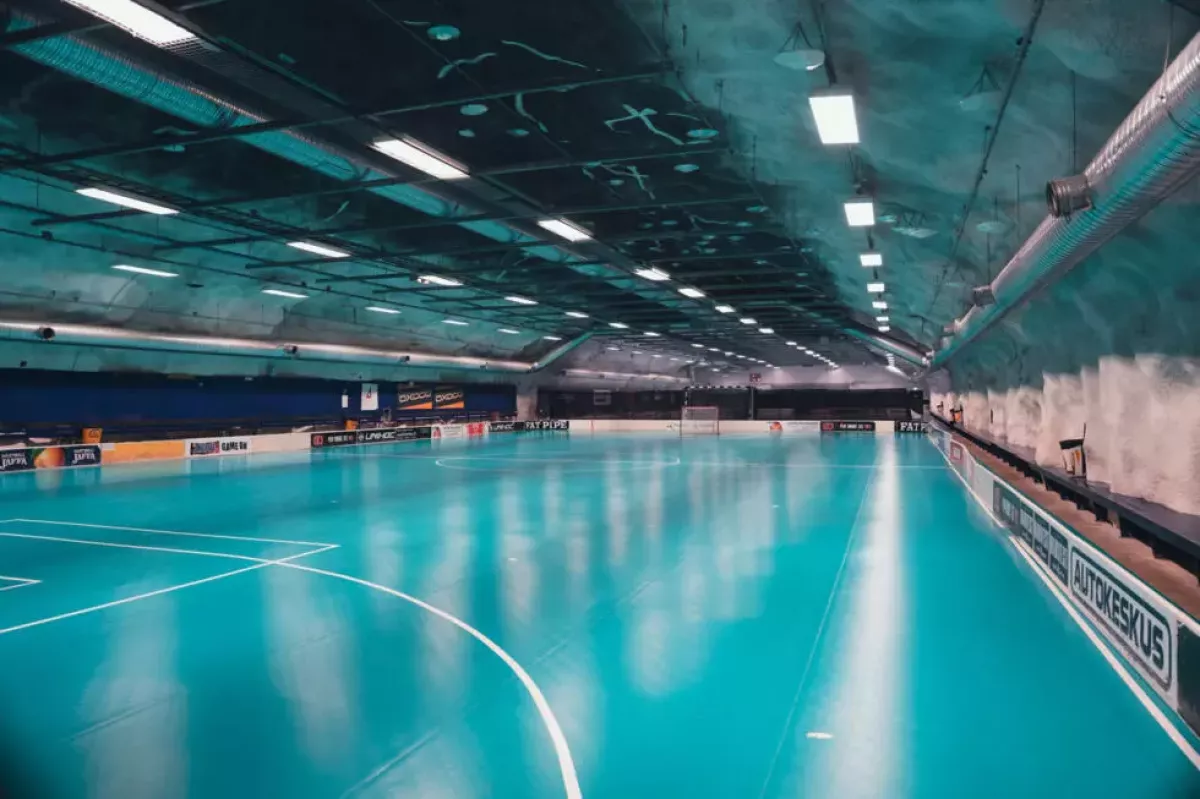
The amendment also introduces an entirely new category: shelter points. Unlike protective structures, these are not subject to detailed technical requirements; they are designated by the competent county commandant of the State Fire Service as places of temporary protection, e.g. during violent weather events.
3. Funding — at least 0.3% of GDP
The act guarantees annual spending on civil protection at no less than 0.3% of GDP. This is a statutory obligation, not a political declaration. The funds are to be divided between the budget of the Ministry of the Interior and Administration and the budgets of the provincial governors.
The amendment (passed by the Sejm in March 2025) clarified the funding rules, making it possible to carry out multi-year tasks within government programmes: financing investments, purchasing equipment or building infrastructure can be settled over cycles of up to five years. The amended rules also allow derogations from the Public Procurement Act when building shelter, communications and medical infrastructure, which significantly speeds up the delivery of urgent projects.
What changes for local governments?
Municipalities and counties become the main implementers of the new system. The head of a rural municipality, a town mayor or a city president is responsible for ensuring local civil protection, including (in the event of a threat) water and food for at least 7 days for the evacuated population.
Local governments must keep a register of protective structures in their area and organise exercises. This is an enormous organisational and financial challenge, especially for smaller municipalities, which are often building their civil-defence structures literally from scratch.
The shelter register and the "Where to take shelter" app
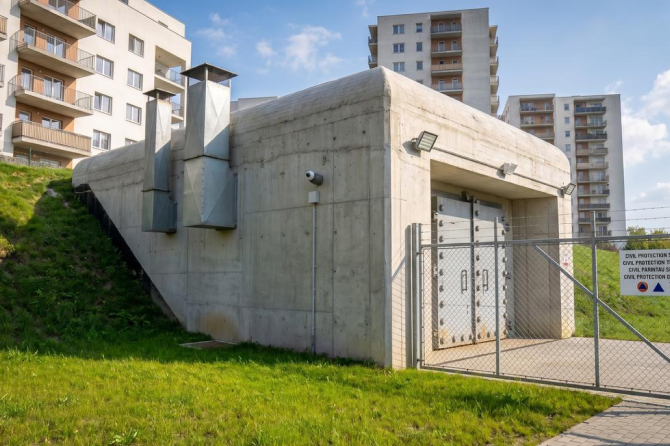
The act imposes an obligation to keep a register of collective-protection facilities. A Regulation of the Council of Ministers, which entered into force on 21 August 2025, specifies that a protective structure may be designated in a public-use building with at least one underground storey.
In parallel, the "Where to take shelter" app was launched, though its rollout revealed serious systemic gaps — most of the indicated locations are on private property whose owners are frequently unaware that their property appears on the map as a shelter point.
Training and societal resilience
The act places clear emphasis on education and building civic awareness. The Ordinance of the Minister of the Interior and Administration of 6 February 2025 sets out civil-protection training programmes, and the ordinance of 25 February 2025 governs the rules for exercises. The government has committed to more intensive information campaigns. The dedicated portal gov.pl/web/obrona-cywilna is intended to be an education-and-information hub for various age and professional groups.
What else will be changing?
The act has an implementation schedule spread over several years. Some provisions entered into force on 1 January 2026 (including the new construction obligations); others — such as the rules on technical conditions for protective structures — are the subject of further ordinances.
The Ordinance of the Minister of the Interior and Administration of 9 July 2025 (Journal of Laws 2025, item 932) governs the construction, equipping and maintenance of protective structures. The new rules on technical conditions for protective structures, which allow shelters to be designed to modern standards, have gone through the EU notification process and have served as the basis for designers since the beginning of 2026.
Summary: revolution or evolution?
The new Civil Protection Act is, without doubt, a legislative revolution. For the first time in decades, Poland has a coherent, hierarchical legal system combining crisis management, rescue services and civil defence in a single piece of legislation. The key question is whether resources, competences and political will at the local level can keep pace with the legal changes. The experience of the act's first year suggests that the implementation challenges are enormous, but the direction is right.