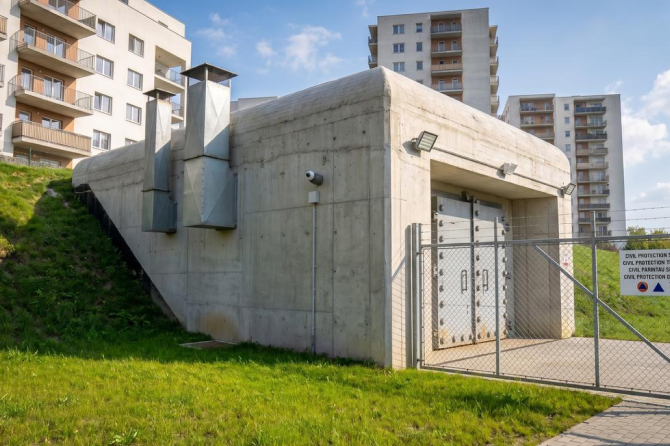

A shelter is not just an unusually sturdy basement. It is a complex piece of engineering in which a mistake at the design stage can mean that, when a real threat arrives, the structure simply fails to work. Yet in Poland the number of architects and engineers experienced in designing protective structures is minimal. For the past three decades, demand for them was close to zero. The new regulations have turned that situation on its head and set the design industry a very tough exam.
Mistake no. 1: A retrofitted design — no reserves in the car park
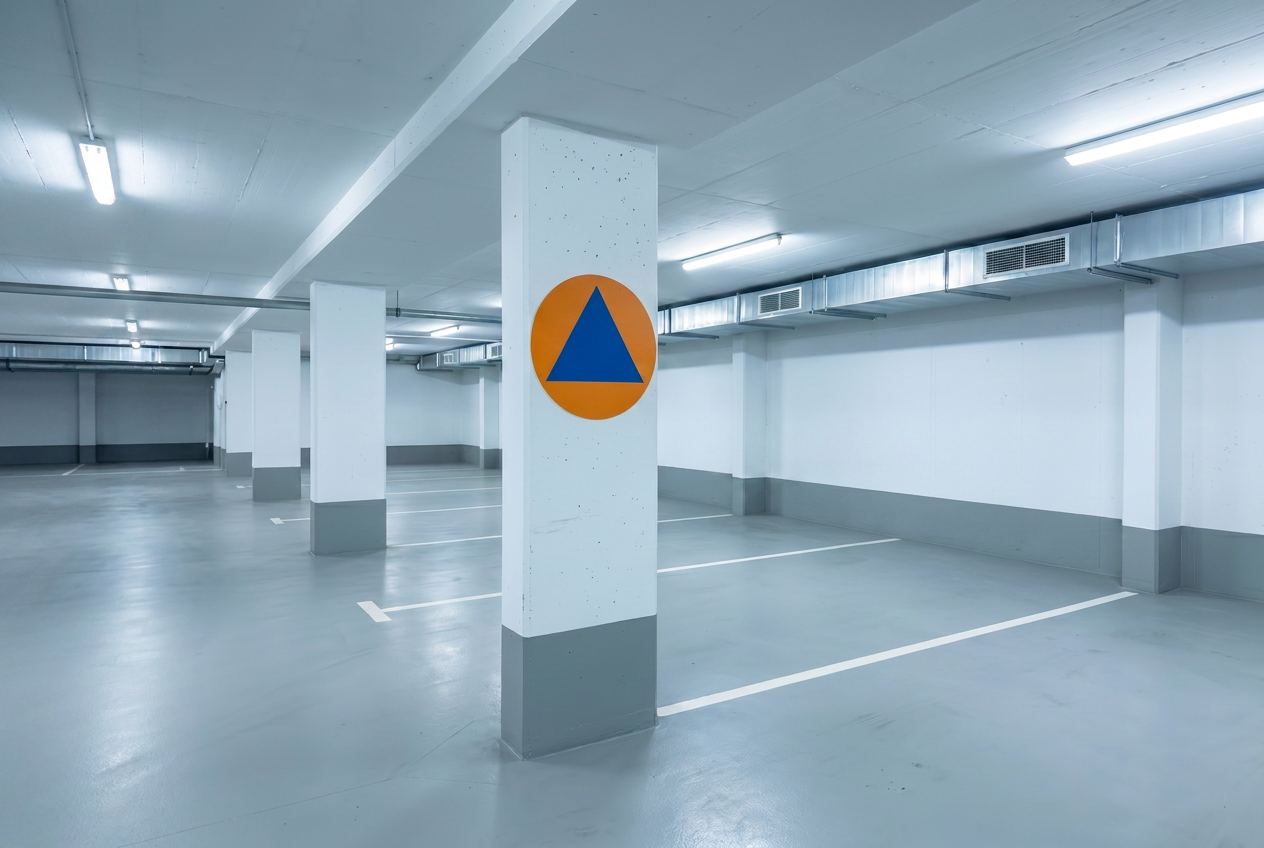
This is probably the most expensive blunder when designing multi-family buildings under the new rules. A developer approves the design of an underground car park without accounting for a future shelter function and then, once the legal requirements prove unavoidable, tries to adapt the existing layout during construction or after it is finished.
The result? Clashes between installations, the need to redesign ventilation routes, conflicts with fire-protection systems, the need to reinforce floor slabs or walls. The cost of an after-the-fact adaptation can be many times higher than the cost of planning the shelter function at the concept stage. The principle is simple, though often ignored: a temporary shelter space must be planned as part of the design from the very beginning, with space reserved for ventilation, electrical and water-and-sewage installations.
Mistake no. 2: Underestimating the filtration-ventilation system
Ventilation in a shelter follows an entirely different design philosophy, requiring knowledge of matters that simply aren't part of typical architectural or building-services training.
Under the Ordinance of the Minister of the Interior and Administration of 9 July 2025 (Journal of Laws 2025, item 932), ventilation systems in protective structures must provide three operating modes: normal ventilation (no external threats), protective filtration ventilation (during a threat, e.g. chemical contamination) and full isolation — complete sealing-off from the outside atmosphere. Each of these modes requires its own components: blast valves, expansion chambers, dust filters, gas filter-absorbers, flow meters and independent fans. The standard assumes roughly 15–25 m³/h of fresh air per person, and the system must be capable of operating autonomously for at least 72 hours.
Yet designers without specialist training often design standard mechanical ventilation, which of course provides comfort in normal conditions but offers no real protection in the event of chemical or radiological contamination.
F7–F9 or HEPA-class filters, activated carbon in the filter-absorbers, an independent emergency power supply (a generator or UPS) — that is the minimum that must be in the design. And it must be there from the outset, because the filtration-ventilation system shapes the requirements for the plant space, walls, floor slabs and duct routing.
Mistake no. 3: Neglecting emergency power
A shelter without power is a shelter that doesn't work. And the electricity grid is one of the first pieces of infrastructure to go down in an armed threat or a major disaster. The new rules require an independent power source able to keep key systems running — ventilation, emergency lighting, communications — for the duration of the structure's autonomous operation. In practice this means a generator with a fuel reserve or an advanced UPS system.
A common design-stage error is failing to allow space for the generator, the fuel system, exhaust extraction and ventilation of the machine room. These elements take up space and must be planned in advance, not "squeezed" into some corner of the car park after contracts with the builders have been signed.
Mistake no. 4: Ignoring risk analysis when choosing the location
The ordinance on technical conditions for protective structures specifies that the distance between shelters should not exceed 500 m, so that residents can reach the nearest shelter on foot within a reasonable time. The location should account for local threats, both in peacetime and under conflict conditions. In practice, architects and investors often focus solely on the technical parameters of the structure itself, ignoring the urban context and the threat map.
A shelter in a building located directly under a flight path or near potential military targets may meet every technical standard while offering negligible protection in a real threat scenario.
Mistake no. 5: Lack of cross-discipline coordination
Designing a shelter or temporary shelter space involves at least four disciplines at once: structural engineering, heating, ventilation and air conditioning (HVAC), electrical and telecommunications installations, and water-and-sewage installations. Each has specific requirements for the shelter space that often conflict with one another.
Ventilation needs room for the filtration-ventilation chamber and duct routes; the structure requires specific wall and slab thicknesses; the electrical system must provide emergency power and safety lighting; water-and-sewage must allow for sanitary facilities able to operate with the municipal network shut off. Without early and intensive coordination between disciplines, a shelter design becomes a sum of mutually exclusive solutions.
Mistake no. 6: Overlooking requirements for people with disabilities
A shelter must be accessible to everyone, including wheelchair users, seniors and people with reduced mobility. Yet designers absorbed in meeting structural and installation requirements often neglect accessibility. A shelter entrance with a half-metre-high threshold, no ramp, narrow passageways — these are typical mistakes that exclude some potential users from the very protection the structure is meant to provide.
Mistake no. 7: No operating and training plan
A shelter that stands unused for a year with no inspections is a shelter that may simply fail to work when a threat comes. Filters age, the generator won't start, hermetic valves corrode. The new rules impose an obligation of regular checks: inspecting the condition of filters, airflow and the tightness of the ventilation system. Yet designs very rarely include maintenance systems and procedures from the outset, and users (building managers or administrators) receive no training in operating shelter equipment.
Towards a more professional industry
Design shortcomings do not stem from ill will on the part of architects or engineers. They stem from a competence gap. For three decades Poland did not train specialists in protective construction. Today the industry faces the need to catch up quickly.
Training is emerging (including at the BUDMA 2026 trade fair), as are technical conferences (such as the December conference of the Polish Association of Sanitary Engineers and Technicians in Katowice) and the first specialisations among design offices. That is a good sign, because the most expensive and most dangerous mistakes are the ones we don't realise we are making.