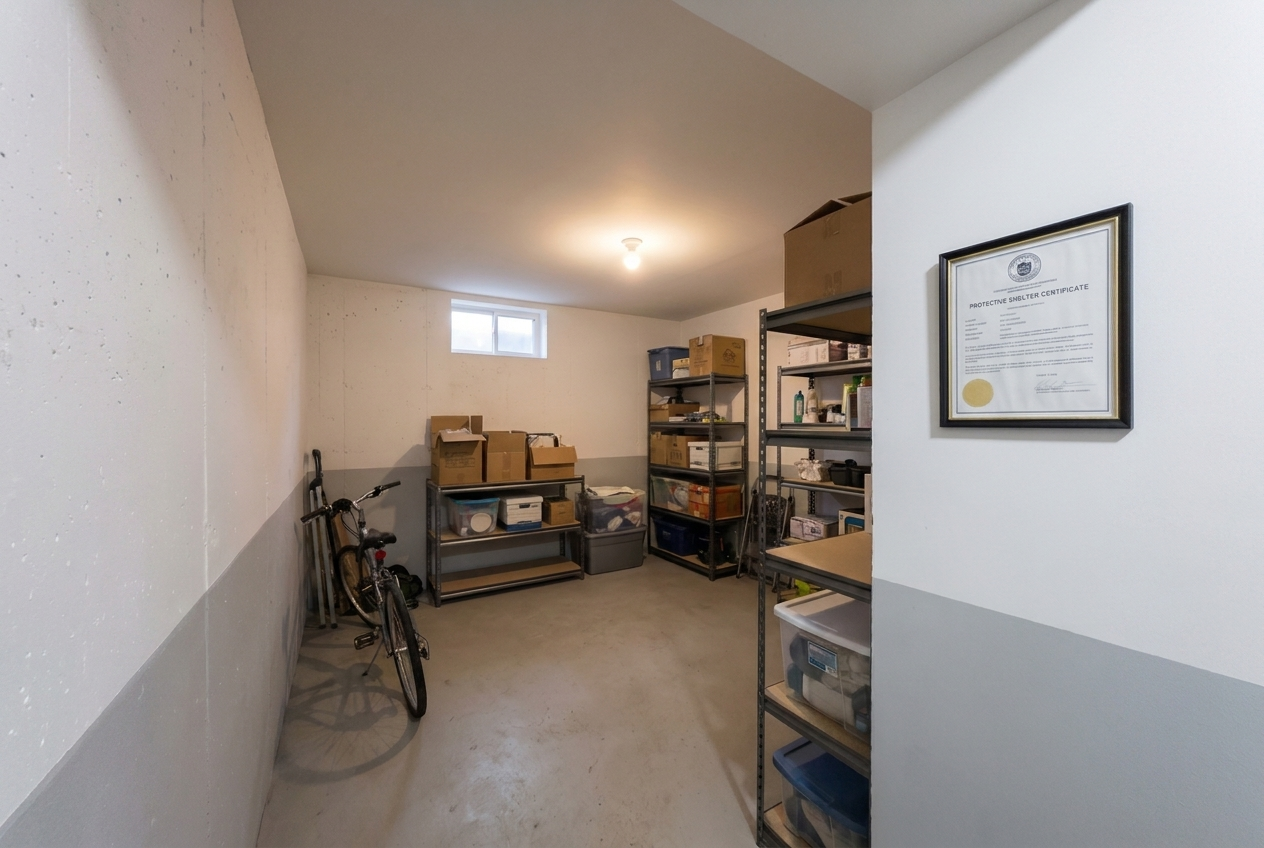
First came greenwashing, a promise of environmental care that wasn't really there. A company painted the packaging green, added a little leaf to the logo, and sold peace of mind instead of an actually smaller carbon footprint. Today the same mechanism is coming back in an industry where the stakes are far higher than the buyer's mood. It's called safetywashing: selling a feeling of safety in place of safety itself.
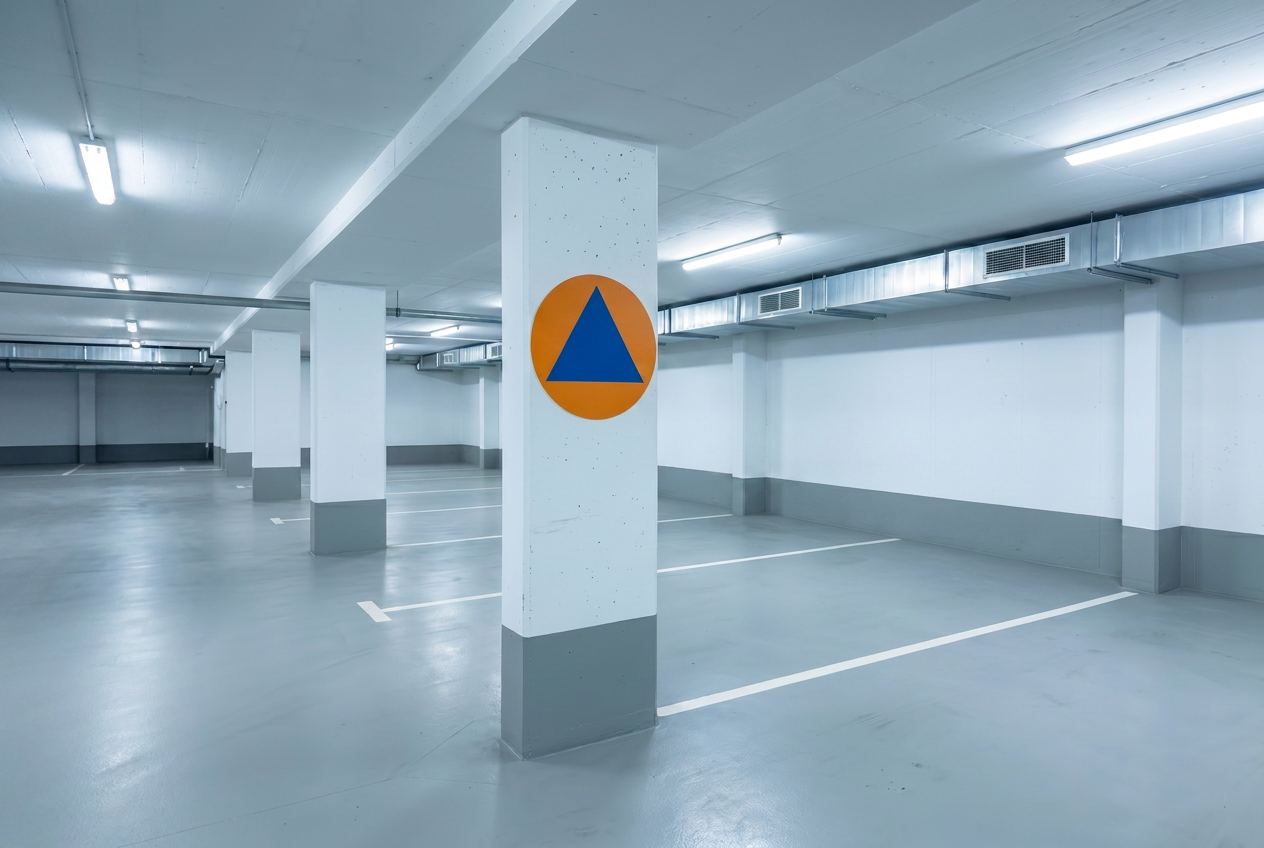
The rule is the same. The product doesn't change, only the description of the product changes. A basement stays a basement, a garage stays a garage, and yet the developer's offer suddenly features a "shelter area," a "safe zone," sometimes plainly a "shelter," usually stamped with a certificate confirming "increased resistance." The buyer reads this as a guarantee. In reality, they're buying a word.
A Certificate That Certifies Nothing
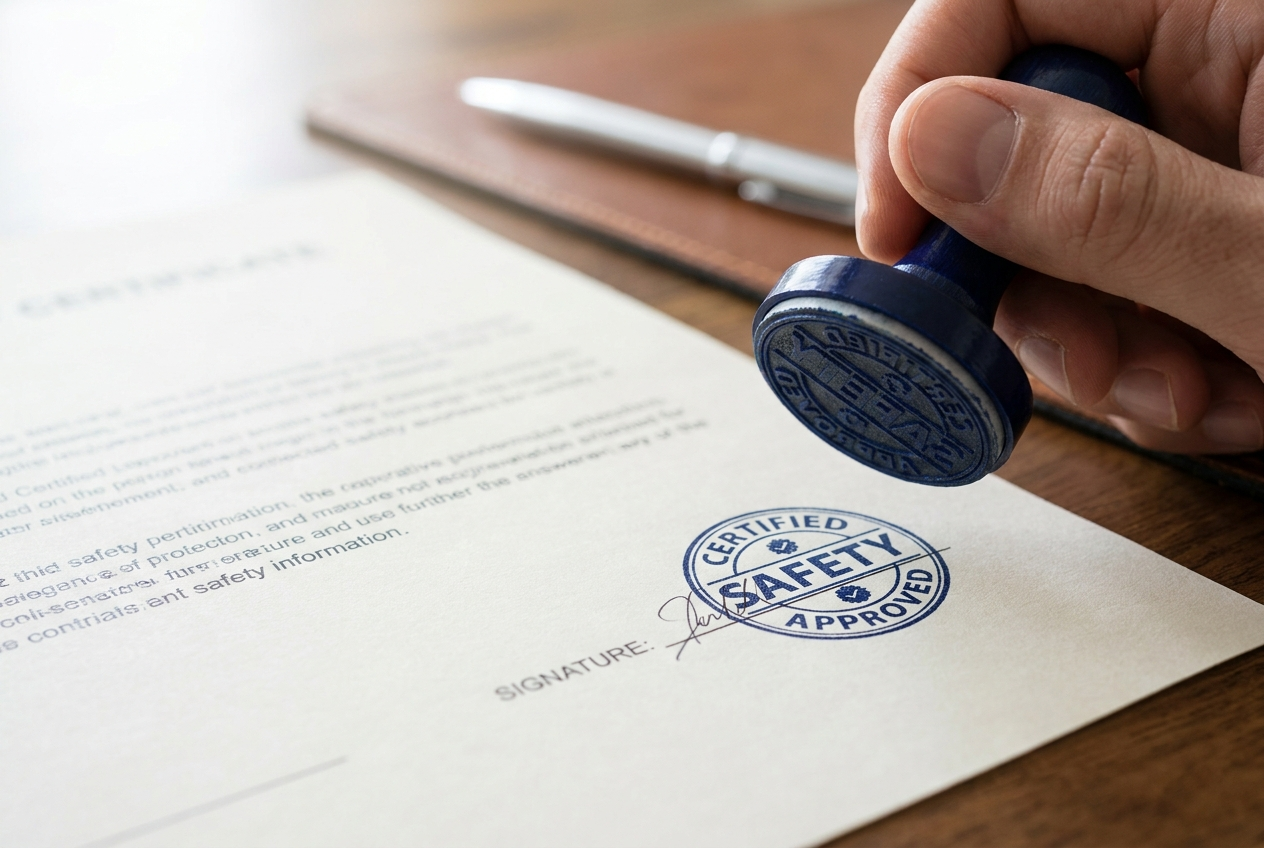
The most interesting thing about safetywashing is that its main tool isn't concrete, it's paper. All it takes is to attach a document with a stamp to the investment: a "safety certificate," a "resistance attestation," a "confirmation of compliance," and the average buyer considers the matter settled. If there's a certificate, surely someone checked.
The problem is that Polish law recognizes no private certificate that grants a building the status of a protective structure. Since 1 January 2025, the Act on Civil Protection and Civil Defence (of 5 December 2024) has been in force, and with it a clear division of roles. Whether a given object qualifies as a protective structure is decided by a public authority: the mayor or city president for objects important to the municipality, the district head for the county, and the voivode for objects of supra local significance. The status is granted by ordinance, by agreement with the owner, or by an administrative decision, based on the regulation of 21 February 2025, which spells out the technical criteria. A company selling apartments has no power whatsoever in this process.
In other words, a commercial "safety certificate" handed over together with the keys to an apartment means nothing in legal terms. It's part of the sales brochure, not the protection documentation. It may describe a real feature of the structure (a thicker ceiling slab, for instance), but it may just as well describe nothing at all. The buyer has no way to tell the difference, because the whole force of such a document rests precisely on the fact that it looks official. This is the core of safetywashing: shifting the burden of proof from the structure to the graphic design.
It's worth adding that this isn't only a question of sales ethics. Advertising an ordinary basement as a "safe shelter" enters the territory of the rules on unfair market practices, because it misleads the consumer about a product feature that genuinely affects the purchasing decision and, in an extreme scenario, their life. The Act itself also tidies up the vocabulary along the way: "shelter," "concealment," and "temporary shelter place" are now terms with defined meaning, not decoration. Using them loosely stops being a harmless marketing exaggeration and becomes a brush with the law.
Three Levels of Protection That Are Easy to Confuse
To see where marketing ends and protection begins, you have to distinguish three things that blur into one in promotional brochures.
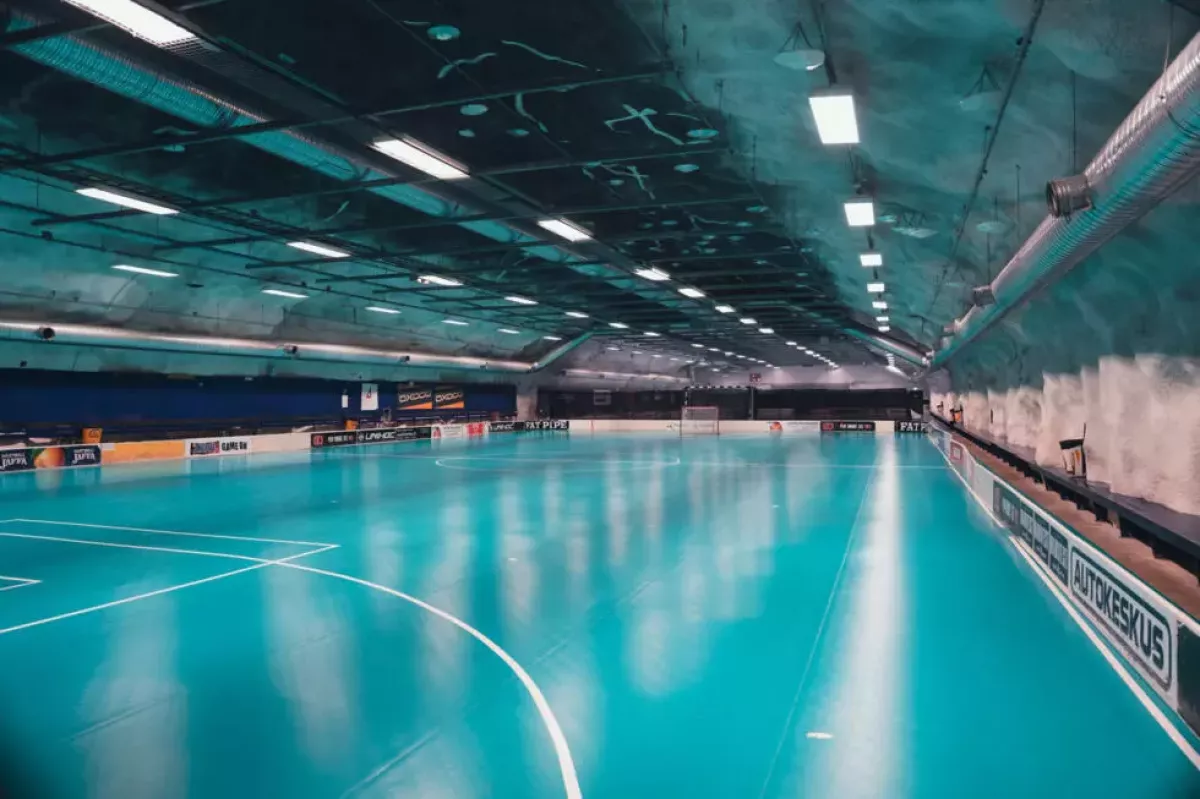
The lowest level is the temporary shelter place. This isn't a new structure, just an adaptation of something that already exists: a basement, an underground car park, a tunnel, a passageway. Its job is to give people momentary shelter from the most basic threats: shrapnel, rubble, the weather. It isn't sealed, it has no air supply of its own, and it isn't designed for a blast wave. It's a "for now" solution, not a shield.
Higher up sits the concealment structure. This already counts as a protective structure, but its construction is not airtight. It protects against shrapnel, burial under rubble, and partly against radiation and blast waves, but it doesn't maintain its own, filtered atmosphere. It has no air filtration system, because by definition it doesn't need one.
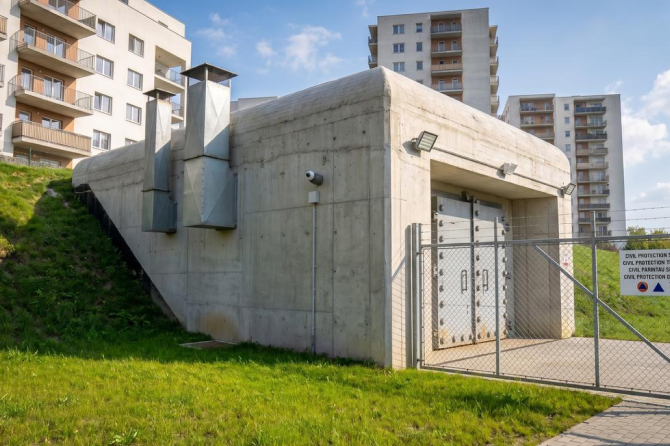
At the top is the shelter: a closed, hermetic structure fitted with air filtration units or regenerative absorbers. The difference between a shelter and a concealment structure isn't cosmetic. A shelter draws air from outside through filters, trapping toxic substances, dust, and contamination, and maintains overpressure inside so that nothing forces its way in through leaks. A concealment structure protects you from what's flying in the air. A shelter also protects you from what the air itself is.
The Act describes this precisely, listing eight protective functions, from shielding against natural disasters, through resistance to shrapnel and burial, protection against gamma radiation, and isolation from chemical and biological agents, all the way to resistance to a blast wave. That last one corresponds to resistance categories: S-0 through S-3 for shelters and U-1 through U-3 for concealment structures. This whole ladder exists so that it can be said unambiguously what a given object protects against and what it doesn't. Safetywashing works by staying silent about which rung of that ladder you're actually standing on.
And here lies a gap worth naming plainly. The rules contain no hard threshold that would say: this building must have a full shelter, not a concealment structure or a temporary place. As long as there's no such threshold, the cheapest solution will always flow into that void. Nobody builds a sealed shelter with air filtration if they can tick off the obligation with a reinforced ceiling slab and add a certificate to it.
Why in Poland "Real" Means "Expensive"
Someone will ask: if shelters are better, why aren't they built on a massive scale? The answer is that in Poland a real shelter has accumulated so many requirements that it has become a deterrent of a project rather than a standard.
Polish norms for the highest shelter categories grow out of Cold War thinking, from a time when a shelter was meant to be a self-sufficient fortress for long weeks of siege. Hence requirements that can surprise you with their scale: a very thick layer of reinforced concrete, many hours of resistance to an intense fire, generous air reserves per person, mandatory storage and technical rooms, and, in larger objects, social facilities, a dedicated water intake, and a second air inlet. Each of these requirements has its own logic in isolation. Added together, they create an object so costly and complicated that the investor would rather not build it at all.
This is form overgrowing substance. A regulation that tries to guarantee maximum protection in practice guarantees none, because it raises the bar so high that everyone slips underneath it sideways, choosing the cheapest temporary place. The paradox is that the more ambitiously we describe the "ideal shelter," the more often what actually gets built is just a basement with a sticker.
It's worth remembering here that Polish law sets minimum requirements for a given category, not maximum ones. Nothing stands in the way of an object registered in a lower category actually being built better, more tightly sealed, with real air filtration. The problem, then, isn't that good protection is forbidden. It's that nobody requires it, and the market pulls downward on its own.
Finland: Protection as the Norm, Not a Luxury
The most frequently cited counterexample is Finland. And rightly so, because it's a country that solved exactly this problem decades ago. Shelters are a part of ordinary construction there: the obligation to build them applies in practice to every larger residential building, and as a result more than 87 percent of citizens have a guaranteed place in a shelter. Not because Finns are wealthier or more anxious, but because for them a shelter is a predictable, repeatable element of a project, not a one off, heroic feat of engineering.
Predictability is the key word here. When the standard is clear, reasonable, and applied on a mass scale, the unit cost drops. In the Finnish model, fitting out a shelter (airtight doors, blast valves, a filtration installation) costs on the order of a few hundred zlotys per person, and the total cost of adding a real shelter to a new building is estimated at a few percent of the price of an apartment. That isn't a sum that ruins an investment. It's a sum that disappears into the price list, as long as someone requires it to be written in.
The Finnish example also debunks the convenient excuse that "real protection simply can't be done cheaply." It can. It just can't be done cheaply given the Polish level of regulatory complexity and the absence of any requirement to do it. Those are two different barriers, and only one of them is technical. The other is knowledge and will.
The Most Powerful Player Is the Informed Buyer
Safetywashing has one unexpected upside: for it to exist at all, demand for safety must already be there. Nobody would fabricate certificates for basements if people weren't asking about safety. That means the market is ready, it just lacks the language to separate real protection from its imitation.
That language is simple and comes down to a few questions worth asking before you believe the sticker. Does this object have protective structure status granted by an authority's decision, and if so, in which category? Is it hermetic and does it have air filtration, or just a thicker ceiling slab? Who signed the "certificate," and what does that signature mean in light of the Act? Three questions are enough to make safetywashing stop working, because its entire mechanism rests on nobody asking them.
Because the truth is that Poland today has everything it needs to build real protection: a good legal framework, public money for protective structures, and proven technology capable of equipping these objects. What's mainly missing is one thing, the widespread awareness that between a basement with a certificate and a shelter that will genuinely keep people alive runs a line no sales brochure can blur.
---
At Eltel, we work on the layer that determines whether a protective structure will actually function at the moment of truth: control, monitoring, and the integration of air filtration. If you're designing or building an object meant to protect people, not just to pass inspection, let's talk.
Sources:
- HoldFort — Schron U‑S1 odpowiedź na safetywashing
- 24Kurier — Piwnica udająca schron. Certyfikat „bezpieczeństwa" załatwia sprawę
- Inżynier Budownictwa — Ustawa schronowa cz. I: kryteria uznawania obiektów za budowle ochronne